

Progress in Logic and Mathematics


CSHPM Notes brings scholarly work on the history and philosophy of mathematics to the broader mathematics community. Authors are members of the Canadian Society for History and Philosophy of Mathematics (CSHPM). Comments and suggestions are welcome; they may be directed to the column’s editors:
Amy Ackerberg-Hastings, independent scholar (aackerbe@verizon.net)
Nicolas Fillion, Simon Fraser University (nfillion@sfu.ca)
As they develop, grow, and mature, sciences change quite significantly. Moreover, the changes are not only cosmetic, but very much substantive. It would be hard for anyone to deny either of these propositions. Over the past few millennia (or even, in some cases, decades), we have witnessed the emergence of completely new methods, the overthrow of deeply entrenched theories that once seemed to be as unshakable as can be, and their replacement by new, once unimaginable, alternatives. Hence there is no question that science constantly re-builds itself, so to speak. Kuhn famously argued in [8; Figure 1] that science evolves by going through phases of normal science and revolutionary science. In normal science, the progress is primarily of a cumulative nature following which more “small” problems get solved. The model of progress in this phase is that more and more questions become settled, and more and more confirmed truths get added to the scientific inventory. However, increasingly-stubborn problems that resist the best solution attempts lead scientific communities into a period of crisis, which eventually resolves itself into a revolution. The revolution is a radical break with the past that overthrows and replaces not only theories and methods, but also in some cases standards, inquiry values, ontologies, and entire conceptual frameworks (referred to collectively as ‘paradigms’). The progress associated with revolutions is not cumulative; rather, it has destructive elements that require rejecting propositions previously thought to be true. Kuhn’s thesis has led to much debate. Some historians of science have argued that his historiography is misleading, sometimes inaccurate. Some philosophers have argued that the term ‘paradigm’ is too hopelessly confused to be of any use. And many sciencephiles from all academic necks of the woods have urged that some of Kuhn’s most strikingly relativist views (e.g., his claim that adopting a new physical theory is akin to a religious conversion) fail to capture the rationality inherent to the march of science. But the fact remains: although there are important nuances and disagreements about how science changes over time, and to what extent, the existence of substantive changes is beyond doubt. It is also hard to dispute that some aspects of scientific change are of the non-cumulative type Kuhn had in mind.
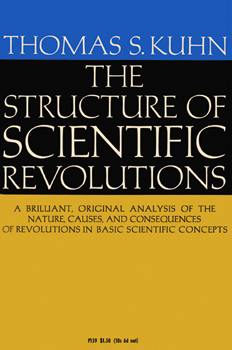
Figure 1. First edition of T. S. Kuhn’s The Structure of Scientific Revolutions
(University of Chicago Press, 1962). Wikipedia.
Mathematics certainly undergoes substantive change as well; I would be shocked if any reader of the CMS Notes disagreed. Once again, the debate is more concerned with how mathematics changes over time, and to what extent. There is undeniably a cumulative dimension to the growth of mathematics: more problems get solved, more propositions are proven, and more powerful methods of analysis are developed. However, compared to the enormous literature on scientific change and on paradigms in history and philosophy of science, there is surprisingly little in history and philosophy of mathematics. One place to begin is by asking whether there are also non-cumulative aspects of the growth of mathematics. To my knowledge, the first study to consider the possibility is Lakatos’ Proofs and Refutations [9; Figure 3]. By examining the history of concepts such as “polyhedron” and “continuity”, he showed that there sometimes are transformations that reconceptualize parts of mathematics in a deep way that doesn’t quite fit the cumulative view of progress. Do such profound transformations rise to the status of Kuhnian revolutions? A rare source that addresses this issue is a collection edited by Gillies [5]. Some authors deny that there are revolutions in mathematics, while others support the claim with examples such as non-Euclidean geometry, irrational numbers, the calculus of infinitesimals, Cantorian set theory’s analysis of infinity, and Hilbert’s formalist philosophy. The debate revolves around what is considered a revolution. Gillies considers two “models”, i.e., the Franco-British revolutions and the Russian revolution. A few years ago, I suggested in [3] that neither captures change in mathematics, but that Quebec’s quiet revolution in the 1960s—one in which no official political regime was overthrown or experienced lost importance, and yet it yielded a thorough renegotiation of how things were to function within given institutions, in order to make society work better for people and get more from those institutions—is a plausible model of some profound transformations in the history of mathematics. But whatever one ultimately thinks about this question, recognizing the existence of non-cumulative change in mathematics raises many puzzling questions about what mathematics is, as a branch of knowledge.
One difficulty is that mathematics is so profoundly entangled with logic and the axiomatic method. Since Aristotle articulated the guiding principles of the axiomatic method in the Posterior Analytics (Figure 2), which was shortly after adapted and implemented by Euclid in The Elements, it has been a constitutive element in what it is to practice mathematics at its highest level. Following the tradition, axiomatic science (including mathematics as the case par excellence) is structured so that we start from self-evident truths (or, at least, propositions known to be true) and deduce other propositions whose truth will then come to be known owing to the fact that deductions are chains of reasonings each step of which is known to be valid. And ultimately, validity is a matter handled by logic. From this perspective, progress is associated with “more knowledge”, which is accomplished by proving more propositions from given axioms and by applying the method to more axiom systems (although one would likely grant that not all propositions or axiom systems weigh the same, progress wise).
Where can non-cumulative progress—the progress that requires overthrowing something—fit within this traditional perspective? One possibility is that something that was thought to be proved was not actually proved, i.e., that we were duped by an incorrect proof. That would prima facie require one of two things: (1) a proposition accepted as self-evident turned out to be false or (2) an inference thought to be valid turned out to be invalid. There are of course many famous cases of both in the history of mathematics. But both ultimately boiled down to us making mistakes. Now, correcting mistakes is hardly the sort of deep transformation that we have considered so far. If there is to be any such thing in mathematics, we must look elsewhere.
Figure 2. Loeb edition of Aristotle’s Posterior Analytics
(Harvard University Press, 1960). Amazon.
The natural place to look for deep transformations in mathematics is by considering that the axiomatic method itself has transformed. Firstly, we may attempt to trace substantive rethinking of the notion of axiom. Indeed, historically, this happened when the notion of axiom separated from the notion of self-evident truth. This parting of ways was deeply entangled with the development of non-Euclidean geometry. An interesting locus where this transformation found its expression is in the Frege-Hilbert controversy on the foundations of geometry that followed the publication of Hilbert’s 1899 Grundlagen der Geometrie (the letters can be found in [4]). Interestingly, this exchange reveals that much of Frege’s ingenuity and logical innovations were deployed to defend the old Euclidean perspective on axiomatic systems that would be overthrown, and that he very much struggled to even understand the new approach to axiomatic science advocated by Hilbert, calling it “pseudo-science”. This transformation was key to developing the structuralist philosophy of mathematics that is now very much associated with modern, post-19th-century mathematics [10].
This was indeed a profound transformation that, at least plausibly, has a revolutionary character, or at the very least accounts for some form of non-cumulative progress in mathematics—as axiological requirements were overthrown. Yet, such transformations of the axiomatic method don’t exactly happen very often; in fact, there seems to be only one occurrence of it in the history of mathematics, which would imply that there has been only one episode of non-cumulative progress in the history of mathematics. There must be more to it.
Looking back at Lakatos’ observation leads to yet another potential source of deep transformation that can be interpreted along this line. One reason to reject the requirement of starting from self-evidently true axioms is that axioms are propositions relating concepts with each other, and that concepts usually have a degree of malleability that prevents one from conclusively declaring a proposition self-evidently true. Lakatos’ history of the concept of polyhedron is a case in point; it starts from what appears to be a satisfactory list of necessary and sufficient conditions to define the concept of polyhedron, i.e., a solid body bounded by polygonal faces, but then difficulties arise as the “intuitively clear” geometrical shape slowly morphed into the topological notion of being homeomorphic to a sphere. Given the open-texture of concepts and the way they transform as a science develops, we must conclude that “it has proved not to be so intuitively clear what is intuitively clear in mathematics” [6]. Intuition-driven conceptual analysis had to be abandoned—not for being useless but for being too limited—as the foundational basis for mathematics.

Figure 3. Imre Lakatos in the 1960s. Wikipedia.
There is (at least!) one more tantalizing place to look for deep transformations in mathematics: in deep transformations in logic, which refers back to (2) above. Given that the axiomatic method largely boils down to how we think about the axioms and to how we think about logically valid inference, there would ipso facto be deep transformations in mathematics if there were such deep transformations in logic.
Are there deep transformations, potentially revolutions, in logic? Answering the question requires that we consider a history that spans nearly 2400 years, from the time when Aristotle wrote the Topics and The Prior Analytics (and the rest of the Organon) to our days. The same man (Figure 4) who presumptuously asserted that the axioms of Euclidean geometry were necessary truths just a few years before Gauss, Bolyai, and Lobatchevsky opened the new field of non-Euclidean geometry also had rather uncompromising things to say about the possibility of change in logic:
- That from the earliest times logic has traveled this secure course can be seen from the fact that since the time of Aristotle it has not had to go a single step backwards, unless we count the abolition of a few dispensable subtleties or the more distinct determination of its presentation, which improvements belong more to the elegance than to the security of that science. What is further remarkable about logic is that until now it has also been unable to take a single step forward, and therefore seems to all appearance to be finished and complete [7, Bviii, p. 106, emphasis added].
Although few have the temerity to make stunningly false claims with this level of assurance and determination, Kant’s opinion that logic essentially doesn’t change is in my experience fairly widespread.
And yet, already by Kant’s time, logic had made significant changes since the time of Aristotle. One source of misunderstanding is that the phrase ‘Aristotelian logic’ is used to refer both to a particular doctrine (the theory of syllogism as laid out in Prior Analytics A, 1-2 and 4-7) and to a centuries-long tradition that persists to our day. For example, readers familiar with Aristotelian logic may have learned the so-called theory of reduction of syllogisms, where syllogistic moods have names such as Barbara, Celarent, Baroco, Bocardo, Festino, etc., whose consonants encode proof steps to show their validity. This, however, is not how logic is thought of in Prior Analytics. Although there are significant debates about how best to interpret that work, the best way to think of how Aristotle himself developed logic in analogy to modern treatments would be to say that his system is a natural deduction system [2; 12]. On the other hand, the theory of reduction mentioned above is definitely not a natural deduction system. It was developed in the high medieval period (its origins are rather muddled), and it is best thought of as a sequent calculus. Now, perhaps Kant thought that the medieval invention of sequent calculus is a “dispensable subtlety”, a mere cosmetic change in logic with no substantive value, but that says more about Kant than about logic. In fact, there is an abundance of major developments in logic in the medieval period, so much so that Bocheński referred to the period as one of the three golden ages in logic (alongside ancient Greek logic and the 20th century). For example, yet another entirely different way of thinking about logic was developed in the late medieval period, i.e., the so-called doctrine of distribution of terms and the doctrine of supposition. This enabled logicians of the time to develop Aristotelian logic in new directions. For example, from the time of Ockham and Buridan, the analysis of inferences involving oblique terms became a focus. Buridan outlined a way of showing the validity of this argument:
- Every donkey of a man runs.
- Some man is a master of a school.
- Therefore, some donkey of a master of a school runs.
It may not look like much to a modern reader, but it introduces arguments involving more than three terms, and it involves a form of relational logic with nested terms (e.g., Christ is God. Mary is the mother of Christ. So, Mary is the mother of God) that goes far beyond Aristotle’s logic. There are many other major developments in that period, e.g., some elements of modal semantics that go beyond Aristotle’s modal logic. It is clear that Kant wasn’t particularly well-versed in the history of the discipline about which he was claiming that it hasn’t and cannot change. It turns out to be easier for one to argue that logic doesn’t undergo substantive change if one doesn’t know the history of logic.
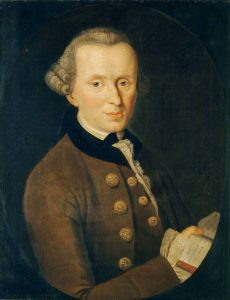
Figure 4. Immanuel Kant as painted by Johann Gottlieb Becker in 1768. Wikipedia.
Others argue at the other end of the spectrum, that logic has changed so much since the time of Aristotle that it’s essentially a new thing altogether. For example, here’s Quine:
- Mathematical logic differs from the traditional formal logic so markedly in method, and so far surpasses it in power and subtlety, as to be generally and not unjustifiably regarded as a new science [11].
If we take Quine completely literally, he’s not saying something along the lines that there was a revolution within logic; rather, there was the birth of a new thing also called ‘logic’ that is the better sibling of the old one. Still, it’s clear from the rest of the Introduction that Quine still considered the old and the new logic to be in continuity with each other; so, Quine is committed to the existence of deep transformations in logic, and it may not unjustifiably be interpreted as a revolution.
That would seem to be yet another potential source of deep, substantive change in mathematics, that may not be cumulative in nature. In the process, some arguments previously accepted as valid were overthrown, e.g., “All A are B, therefore Some A are B” and all other arguments involving “existential commitment” of universal conditional premises. The reasons behind this change run deep and there is no way to do them justice here. Instead, let us conclude by asking whether this potential source of substantive change is distinct from the first two, and whether those two are actually distinct themselves. There were indeed very important transformations in the axiomatic method, in the analysis of mathematical concepts, and in logical methodology—and importantly they all occurred roughly at the same time (late 19th and early 20th century). Although the three are certainly to some extent distinct, they form something like an intellectual version of a small forest connected by a mycorrhizal network. Is this analogy any good? In order to find out, you are invited to get into the study of the history of logic as it intersects with the history of mathematics, the philosophy of mathematics, and mathematical practice itself. There perhaps used to be more pressing things to do, but now AI will take care of them!
References
[1] Bocheński, J. M. (1961) A history of formal logic. Edited and translated by I. Thomas. Notre Dame: University of Notre Dame Press.
[2] Corcoran, J. (1974) Aristotelian syllogisms: Valid arguments or true generalized conditionals? Mind 83(330), 278–281.
[3] Fillion, N. (2019) Conceptual and computational mathematics. Philosophia Mathematica 27(2), 199–218.
[4] Frege, G. (1980) Philosophical and mathematical correspondence. Edited by G. Gabriel, H. Hermes, F. Kambartel, C. Thiel, & A. Veraart. Translated by H. Kaal & B. McGuinness. Chicago: University of Chicago Press.
[5] Gillies, D., ed. (1992) Revolutions in mathematics. Oxford: Oxford University Press.
[6] Heyting, A. (1962) After thirty years. In Logic, methodology and philosophy of science: Proceedings of the 1960 International Congress, edited by E. Nagel, P. Suppes, & A. Tarski, 194–197. Redwood City, CA: Stanford University Press.
[7] Kant, I. (1781/1998) Critique of pure reason. Edited and translated by P. Guyer & A. W. Wood. Cambridge: Cambridge University Press.
[8] Kuhn, T. S. (1962) The structure of scientific revolutions. Chicago: University of Chicago Press.
[9] Lakatos, I. (1976) Proofs and refutations: The logic of mathematical discovery. Cambridge: Cambridge University Press.
[10] Mac Lane, S. (1996) Structure in mathematics. Philosophia Mathematica 4(2), 174–183.
[11] Quine, W. V. (1951) Mathematical logic. Cambridge: Harvard University Press.
[12] Smith, R. (1989) Introduction. In Prior analytics, translated by R. Smith. Indianapolis: Hackett Publishing Company.
Nicolas Fillion is associate professor of philosophy at Simon Fraser University. His research spans the philosophy of science, applied mathematics, logic, critical thinking, and epistemology. He is Director of the SFU Ethics Bowl project and Chair of Ethics Bowl Canada, and he was president of CSHPM from 2022 to 2024. He is also serving as SFU’s Academic Convenor for Congress 2027 of the Federation for the Humanities and Social Sciences.
Keywords: philosophy of mathematics, mathematical logic, history of philosophy of mathematics


