

Margaret Rossiter, Caroline Seely, Professional Mathematics, and American Masculinities


CSHPM Notes brings scholarly work on the history and philosophy of mathematics to the broader mathematics community. Authors are members of the Canadian Society for History and Philosophy of Mathematics (CSHPM). Comments and suggestions are welcome; they may be directed to the column’s editors:
Amy Ackerberg-Hastings, independent scholar (aackerbe@verizon.net)
Nicolas Fillion, Simon Fraser University (nfillion@sfu.ca)
As a historian of mathematics and gender, my research often involves questions about various forms of masculinity. Yet, two women have remained central to my work: Caroline Seely (1887–1961) and Margaret Rossiter (1944–2025). Caroline Seely was an American mathematician who earned her PhD from Columbia University in 1915 and worked for more than two decades as a clerical assistant at the American Mathematical Society (AMS). Margaret Rossiter, who passed away last August, was one of the most important historians of science in the past century. In what follows, I’ll explain how Rossiter’s work can help historians understand Seely and how both relate to histories of mathematics and masculinity.
As recent tributes have noted, Rossiter is known primarily for her three-volume Women Scientists in America.[1] According to a profile in Smithsonian Magazine, Rossiter “almost single-handedly made relevant” the history of women in science as a topic of scholarly interest.[2] To write her books, Rossiter spent decades traveling across the United States, tracking down information about women scientists, and compiling as many archival traces as she could find. “Finding” women scientists in the archives was (and still is) difficult work because the process of archival preservation is often organized around famous individuals, including celebrated scientists. Yet, women scientists were rarely considered scientists, let alone celebrated. So, from an archival perspective, they seemed not to exist.
The documentary evidence in Rossiter’s work is extraordinary. But beyond shedding light on individual women scientists, Rossiter compiled and analyzed the details of their lives and careers to uncover the systemic patterns and mechanisms of discrimination that many of them were up against. Rossiter wrote about the distinctions between labor markets for men and women in science, for example, which often involved hiring overqualified women researchers for underpaid jobs as assistants or calculators.
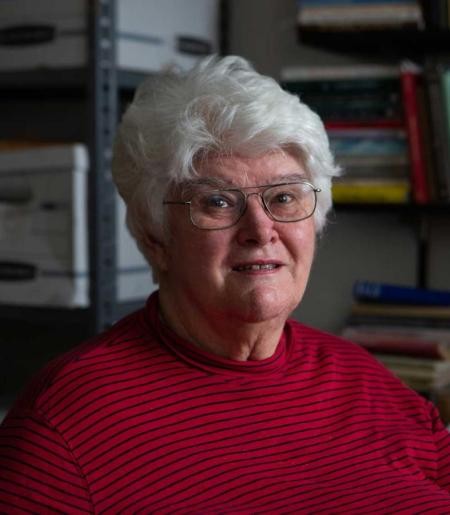
Figure 1. Margaret Rossiter (1944–2025). Cornell University.
I encountered one of these early-twentieth-century overqualified women researchers during my third year as a graduate student in Professor Rossiter’s former department at Cornell. In the spring of 2017 at Brown University, I visited the beautiful John Hay Library, which houses the archives of the American Mathematical Society (AMS). Like most institutions’ administrative records, the AMS’s can be quite boring. And, like most archival reading rooms, the John Hay is meant to stay perfectly quiet. So I was surprised to find myself laughing out loud while reading through letters from a clerical assistant named Caroline Eustis Seely.
An example of Seely’s (sometimes snarky) humor comes from a letter to the Secretary of the AMS, Roland Richardson, written in August 1923. Seely was busy helping to manage the process of legal incorporation for the Society, and she began the letter by joking, “I thought ladies were generally excused from having to read law, on account of mental incapacity. Anyway . . .”, and then proceeded to explain the details of a particular section from the Education Law of 1910.[3]
I later learned from a short biographical entry in Pioneering Women in American Mathematics that Seely had been hired to do clerical work for the AMS in 1913.[4] Two years later, she earned her PhD with a dissertation titled “Certain non-linear integral equations.” For the next two decades, she managed an increasingly large range of administrative and editorial work while continuing to pursue her own research in mathematical analysis.
Like other women scientists, Seely does not have an archive attached to her name. So, I, along with other historians and collaborators, have continued looking for letters she wrote to men whose records were deemed worthy of preservation. In some ways, this is a small-scale version of Rossiter’s approach to learning more about women scientists. But beyond this methodological similarity, Rossiter’s Women Scientists in America has been invaluable for my attempts to understand Seely’s position within the developing community of American mathematics and the status of women mathematicians more broadly.
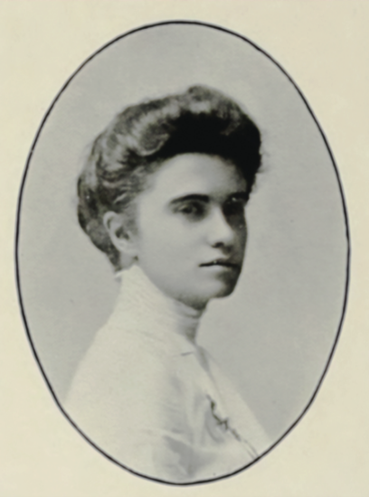
Figure 2. Caroline Seely (1887–1961). Notices of the AMS.
Rossiter’s work, for example, documented the reality that earning a PhD rarely led to research-oriented employment for American women in the early twentieth century. Instead, women scientists were often confined to “women’s work,” such as assisting other researchers, teaching young women, or performing clerical jobs. As Rossiter has demonstrated, the rise and professionalization of “big science” brought with it new administrative and auxiliary roles that were generally deemed “appropriate” for women. Although other forms of science may have generated more assistant-type roles than mathematics did, Seely’s work was crucial to new forms of bigness in American mathematics that resulted from a rapid period of fundraising and professionalization throughout the 1920s.[5]
Overall, Rossiter’s publications have helped document the specific practices and trends that have kept women out of science and women scientists out of the spotlight, thus making science seem like something that women don’t do. My own research on mathematics and masculinities asks a related and somewhat complementary question: What has made mathematics seem like something that men do? The historical exclusion of women from the category “mathematician” is part of the answer. But I am also interested in the cultural dynamics that have worked to associate mathematics with different kinds of people, perceptions, and ways of being in the world. As such, the analysis of gender in my research is less about categories such as men and women and more about the processes of power and identity that are formed in and around cultural activities and products such as mathematics.[6] Somewhat paradoxically, part of my analysis considers how Seely and her administrative labor helped to enact new forms of masculinity for early-twentieth-century American mathematicians. Specifically, I argue that Seely’s work served as a foil to the prestige of men’s research while simultaneously making said research possible. By the end of World War I, American mathematicians had established a professional hierarchy that valued the pursuit of abstract research above both applied research and teaching. This hierarchy was notably gendered, as women were often confined to teaching positions with full course loads while the prestige of abstract research was reserved for men. New forms of funding and institutional support that were central to American mathematics in the 1920s worked to intensify these dynamics. New postdoctoral fellowships bolstered the talents of promising young men, for example, while funding for publications benefitted researchers at the “top” of the professional hierarchy. Indeed, during this time, American mathematicians began to define themselves increasingly in terms of published research, new forms of funding, and international repute. Through her work at the AMS, including negotiating with printers, managing capital campaigns, and corresponding with mathematicians worldwide, Seely was central to developing these mechanisms of prestige and professionalism. At the same time, Seely herself and the “girls” she hired to help with office work became a point of contrast to professional researchers. As Rossiter has noted, even as the number of women scientists began to increase, “only a few were considered ‘professionals’.”[7] Although in fact Seely’s work relied on a range of mathematical and administrative expertise, her position reinforced pre-existing assumptions about women and menial labor while professional research reputation became its own form of masculinity.
Throughout the 1920s, for example, attending and presenting at AMS meetings remained a central component of developing a professional research reputation. Seely both attended and presented at many of the AMS’s regular, annual, and summer meetings. For all meetings, she was a key organizer, and much of her work involved making separate accommodation and scheduling arrangements for men and women. In December 1922, she wrote to Richardson, referencing other AMS leaders, Thomas Fiske and Herbert Slaught:
The programme looks all right to me. It seems to me the women are well taken care of, and get a great deal of tea. I warn you there is always trouble about how we get seated at general dinners. The ladies don’t like to be segregated off in a corner (Fiske made that awful break once in New York), and yet if left to themselves are likely to segregate themselves and then be discontented because they have. Once Slaught had a good solution (wasn’t it in Chicago) of announcing that no two ladies were to be allowed to sit together; as there is always a superfluity of men, the women haters can get together in spite of this. I suppose I oughtn’t to give away trade secrets like this, but they all come and confide in me if they don’t like things.[8]
As Rossiter’s work has shown, by the 1920s women scientists had fought successfully to attend scientific conferences that were previously restricted to men. Yet, it was often in the informal spaces at conferences, such as dining rooms, that research partnerships, new ideas, and professional reputations were formed. To separate women from men at mealtimes would have meant separating them from professional research mathematics.
It would not be an exaggeration to say that sustained efforts over the past half-century to support the advancement of women and other underrepresented scholars in science can be tied almost directly to the findings in Rossiter’s work. Indeed, few historians have had the level of impact on contemporary perceptions that Rossiter has had on our understanding of women’s participation in science. Like others, I hope to continue this work, in part by telling stories such as Seely’s.
Ellen Abrams is an Assistant Professor at the University of Toronto Institute for the History and Philosophy of Science and Technology. She is currently writing a book about mathematics and masculinities in the United States.
Notes
[1] Rossiter, Margaret W. (1984) Women Scientists in America: Struggles and Strategies to 1940, Baltimore: Johns Hopkins University Press; Rossiter, Margaret W. (1998) Women Scientists in America: Before Affirmative Action, 1940–1972, Baltimore: Johns Hopkins University Press; Rossiter, Margaret W. (2022) Women Scientists in America: Forging a New World since 1972, Baltimore: Johns Hopkins University Press.
[2] Dominus, Susan. (2019, October) Women Scientists Were Written Out of History. It’s Margaret Rossiter’s Lifelong Mission to Fix That. Smithsonian Magazine. https://www.smithsonianmag.com/science-nature/unheralded-women-scientists-finally-getting-their-due-180973082/ (accessed 29 October 2025).
[3] Seely, Caroline, to Roland Richardson. (1923, August 15). Rowland George Dwight Richardson Papers, American Mathematical Society Records, Box 21, Folder 121. The John Hay Library, Brown University, Providence, RI. Benjamin Braun, Sloan Despeaux, and I write more about Seely’s institution-building efforts in a forthcoming article in the Bulletin of the American Mathematical Society.
[4] Green, Judy, and Jeanne LaDuke. (2009) Pioneering Women in American Mathematics: The Pre-1940 PhD’s. Providence, RI: The American Mathematical Society. For a more recent overview of Seely’s career, see Tattersall, James J., and Shawn L. McMurran (2023), Caroline Seely at the AMS (1913–1935): From Executive Assistant to Associate Editor, Notices of the American Mathematical Society 70(7), 1121–1129.
[5] Parshall, Karen Hunger. (2022) The New Era in American Mathematics, 1920–1950. Princeton: Princeton University Press.
[6] See, for example, Abrams, Ellen (2020) “Indebted to No One”: Grounding and Gendering the Self-Made Mathematician. Historical Studies in the Natural Sciences 50(3), 217–247.
[7] Rossiter (1984), p. 73.
[8] Seely, Caroline, to Roland Richardson. (1922, December 2) Rowland George Dwight Richardson Papers, American Mathematical Society Records, Box 21, Folder 99. The John Hay Library, Brown University, Providence, RI. I have also written about this letter in Abrams, Ellen (2023), “Caroline Eustis Seely (1887–1961): A Letter to the American Mathematical Society (1922). In Women in the History of Science: A Sourcebook, edited by Hannah Wills et al., 371–375. London: UCL Press. https://doi.org/10.2307/j.ctv2w61bc7.64.


